Irregular freeze-thaw cycles, paired with Edmonton’s harsh winter conditions, can leave your deck prone to cracking and warping. In addition, heavy ice or snow loads can exacerbate damage, potentially compromising structural integrity. By staying on top of seasonal challenges, you’ll be better prepared.
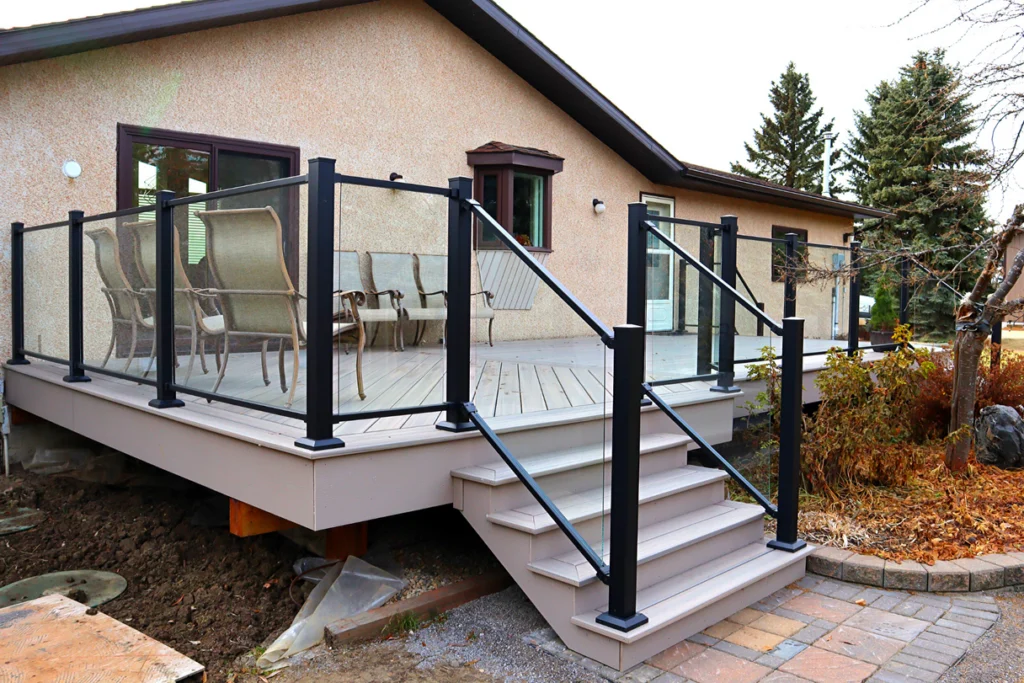
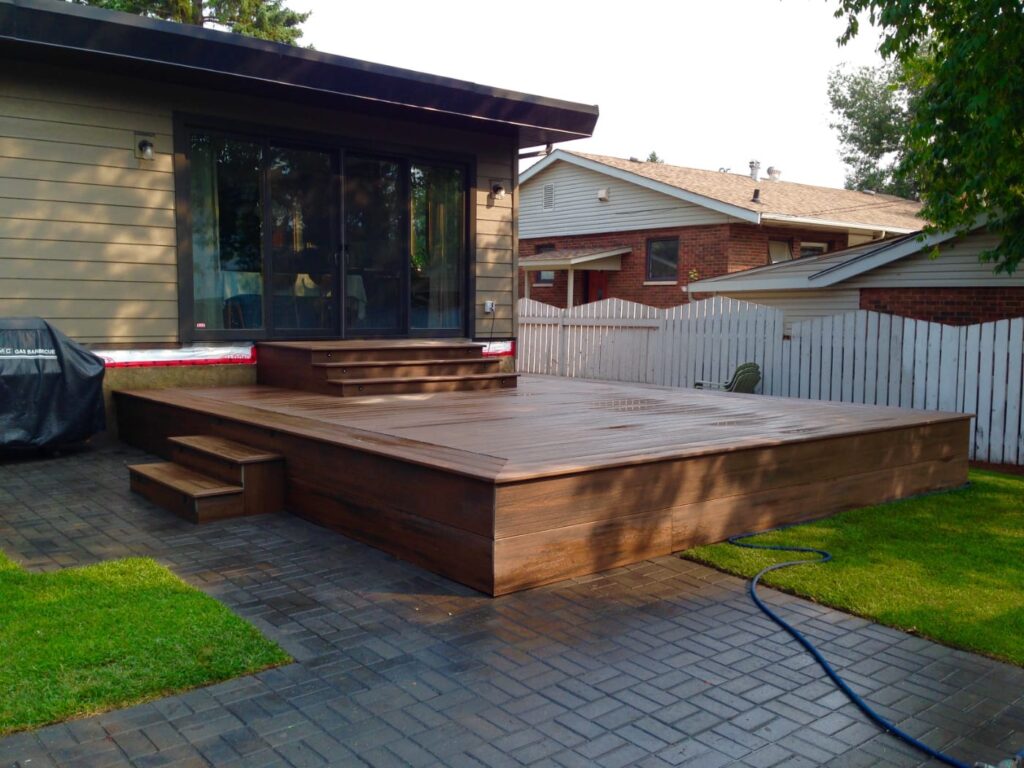
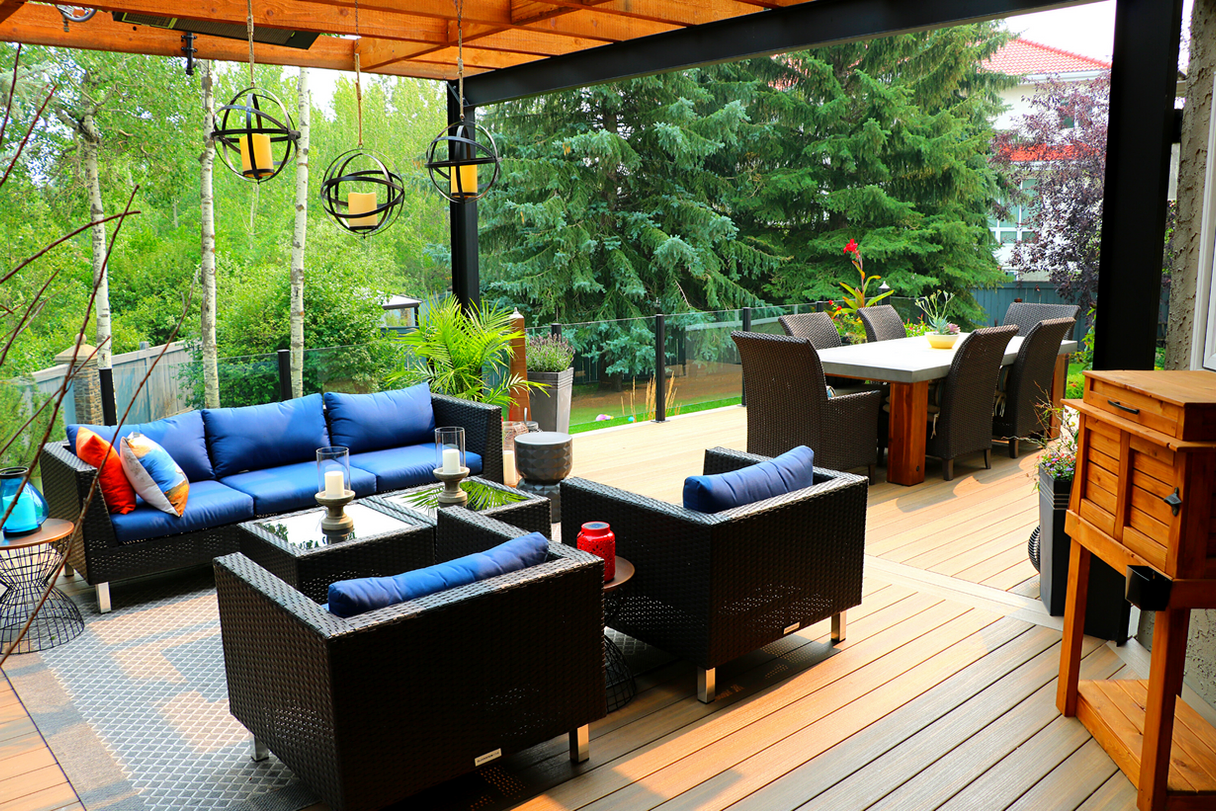
At Sustain Builds, our skilled contractors specialize in building Edmonton decks that’ll withstand the harsh elements. From beautiful wood to elegant composite decks with wood-grain textures, find custom styles and finishes to accentuate and protect your home.
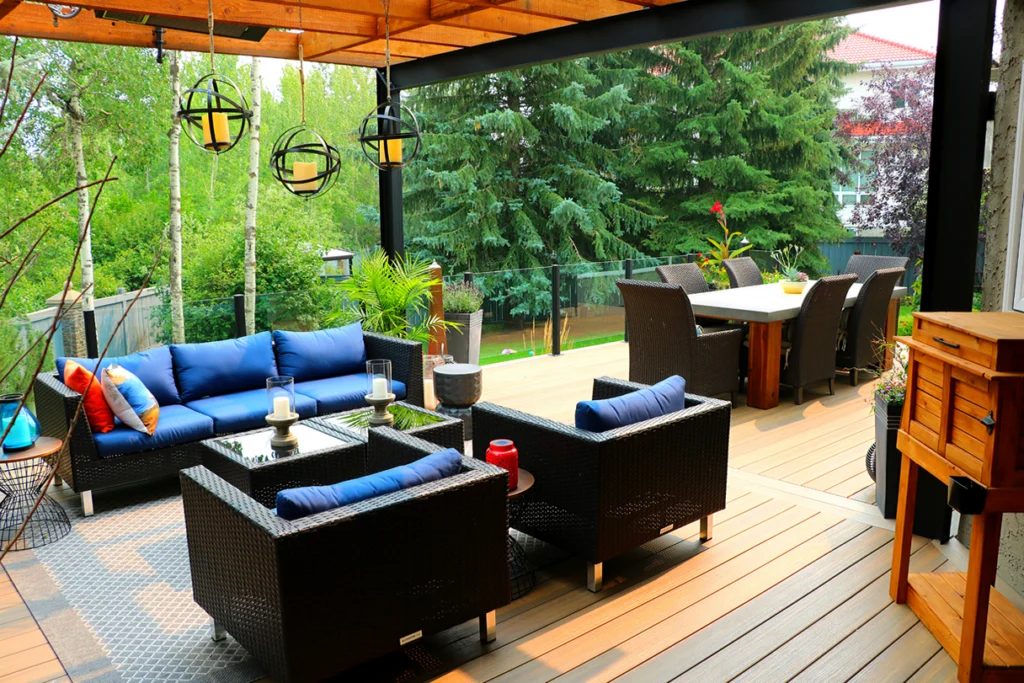
How Snow & Ice Affect Deck Materials
Snow removal is essential to reducing the strain on your deck’s structure. Without proper maintenance, heavy, wet snow can penetrate the deck, making it more susceptible to rot and weaken the beams or joints.
Snow Weight & Structural Stress
To manage snow-related issues, perform routine inspections. If there are any loose boards or splintering, you’ll want to repair your deck or contact a professional as soon as possible. Take steps like sealing your deck with a water-repellent finish or using plastic shovels that won’t damage the surface. Regular cleaning of debris, leaves, and dirt is also important for avoiding the formation of ice patches, which can leave the surface slippery and strained.
Moisture Penetration
Moisture from snow can quickly seep into gaps. Common throughout the winter, water freezes and thaws, expanding and contracting your deck components. Repeated freeze-thaw cycles can stress fasteners and other materials, including wood and plastic.
Rot, Mould & Organic Growth
Persistent moisture leaves your deck vulnerable to mould. Additionally, swelling and shrinkage from freeze-thaw cycles increase the risk of rotting. Homeowners are recommended to invest in a quality drainage system, as pooling and stagnant water also contribute to faster organic growth.
Ice Dams & Falling Snow Hazards
Ice dams, typically near the edges of your roof, often trap water and prevent it from running off your deck into the gutters. During the winter season, it’s also common for snow to accumulate on rooftops, which can damage your deck if a heavy load drops suddenly. These formations can all negatively impact the structural integrity of your deck.
Types of Materials for Your Decks
Wood Decks
Untreated or real wood decks are susceptible to moisture absorption and freeze-thaw cracking. With exposed grain, snow, ice, and water can seep in easily, resulting in warping. To protect wood decks, frequent sealing and inspection are recommended. You’ll want to choose a sealer that withstands temperature swings, especially for Edmonton temperatures, where winter days can reach as low as -30°C or -40°C.
Composite Decks
Unlike wood decks, composite decks do not require staining or sealing. Made from a combination of wood and plastic, they offer a realistic woodgrain look while offering a surface resistant to mould and rotting. However, it is still subject to surface wear, slickness, and fastener corrosion. During the winter months, a simple sweeping, shoveling is usually the only maintenance required.
Pre-Winter Preparation
Clear Debris & Inspect Boards/Fasteners
As time passes, leaves, debris, and dirt can get in between the boards, forming piles. It’s easy for moisture to settle in, accelerating rot. A good practice is to sweep away any visible debris and check fasteners, gaps, or grooves to ensure there’s no splintering, soft spots, rotting, or damage. Avoid using metal shovels that may easily scratch off protective barriers, leaving room for moisture to enter.
Apply Sealant
Before the winter season hits, start preparing by using a sealant that’s designed for your deck material (e.g. cedar, composite, pressure-treated, red wood, etc.). For best results, use one that is water-resistant and can withstand Edmonton's below-freezing temperatures. Clear away any debris or mould first, allowing your deck to dry for at least two days before applying the sealant.
Avoid Salt & De-Icing Agents
Although rock salt and de-icing agents can speed up the thawing process, they also speed up corrosion or leave unsightly stains on wooden decks. Instead, use a plastic shovel to gently remove snow and perform regular inspections.
Calcium Chloride for Composite Decks
For composite decks, calcium chloride ice melt can be used, as it’s less abrasive than salt. However, it should be used sparingly, and adding more than the recommended amount may not increase the rate of ice melting. Rinsing your deck with warm water (not hot or boiling) can also be a safe and effective way to melt ice.
Sustain Builds for Quality Decks in Edmonton
At Sustain Builds, we believe in creating spaces that help you create memories. No matter how custom or complex your vision is, our skilled builders have the resources to assist with your deck installation or renovation.
We understand how Edmonton weather works and craft solutions, including low-maintenance composite decks, that’ll keep your deck looking beautiful in any season. Ready to start? Get a free quote or learn more about our Edmonton decks today.